Ethiopia declares its first Marburg outbreak over after 42 days without new confirmed cases
Ethiopia says its first-ever Marburg virus outbreak has ended after meeting the standard 42-day monitoring period with no new confirmed infections, following a response supported by the World Health Organization.
Outbreak declared over
Ethiopia has officially declared the end of its first outbreak of Marburg virus disease after completing the required follow-up period without any new confirmed cases. Health authorities said the country reached the 42-day mark—two full incubation cycles—used as the benchmark for declaring an outbreak over.
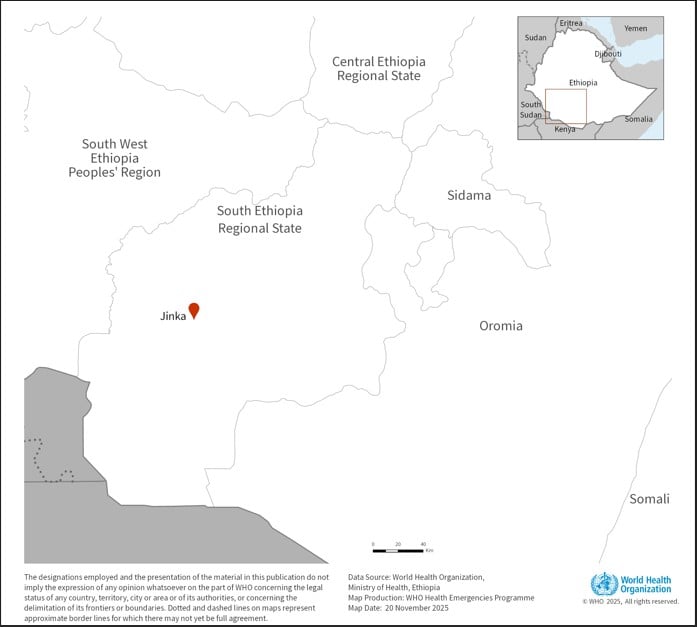
The outbreak was first confirmed on November 14, 2025, in Ethiopia’s southern region near the border with South Sudan. Reporting summarized by the Associated Press said there were 14 confirmed cases, including nine deaths and five recoveries, and the World Health Organization also cited additional deaths classified as possible cases.
How Marburg spreads
Marburg is a viral hemorrhagic fever linked to fruit bats and can spread between people through close contact with bodily fluids and contaminated surfaces. Symptoms can include fever and severe gastrointestinal illness, and in some cases fatal bleeding. Public health authorities note that there is no licensed vaccine or specific approved treatment, so rapid detection and strict infection-control measures are central to stopping transmission.
Response and support
WHO said it supported Ethiopia’s response across surveillance, laboratory diagnostics, case management, infection prevention and control, and logistics—steps aimed at breaking transmission chains and ensuring contacts are monitored until risk is judged to have passed.