Winter storm disrupts travel nationwide, with mass cancellations and a private jet crash under investigation
A major winter storm sweeping the eastern U.S. has snarled air travel with thousands of cancellations and delays, while investigators examine a private-jet crash during takeoff in Maine amid hazardous conditions.
A sprawling winter storm continued to batter large swaths of the eastern United States on Monday, disrupting daily life and pushing the country’s air travel network into crisis-mode. Airlines canceled thousands of flights as snow, sleet and freezing rain reduced visibility, iced runways and slowed ground operations at many airports across the Northeast and Southeast.
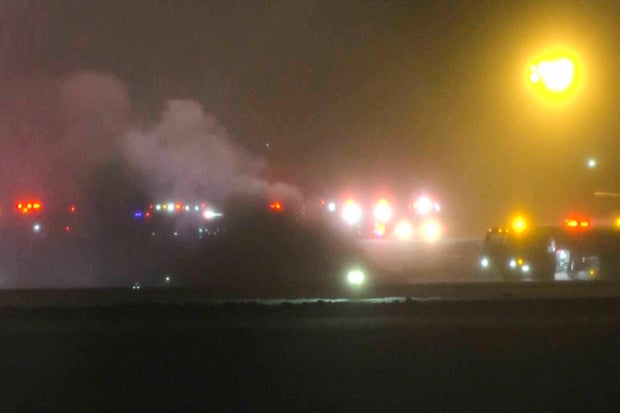
The disruption sharpened after a Bombardier Challenger 600 private jet carrying eight people crashed during takeoff from Bangor International Airport in Maine on Sunday evening, federal officials said. The crash was reported around 7:45 p.m., and emergency crews responded as the airport closed in the aftermath. The Federal Aviation Administration and the National Transportation Safety Board opened an investigation, and authorities said there was no immediate public update on the condition of those aboard.
The incident unfolded against a backdrop of widespread storm impacts that also included major airline interruptions. Officials cited large numbers of cancellations and delays nationally as the system absorbed knock-on effects from weather across multiple regions, with airports in the Northeast among those particularly strained by heavy snow and difficult de-icing conditions.
While commercial aviation has procedures for operating in winter weather, large storms can overwhelm capacity when runways need repeated clearing, aircraft require de-icing, and crews are forced into schedule changes. Those issues can cascade through the network, turning local weather into nationwide delays as aircraft and crews are displaced.
In Maine, investigators will examine a range of factors that commonly come under scrutiny after a takeoff accident, including aircraft performance, weather observations, runway conditions, possible mechanical issues, and communications between the flight crew and air traffic control. The NTSB typically retrieves flight data and cockpit voice information when available and conducts interviews as part of its initial fact-finding.
For travelers, the storm’s impacts meant long lines, rebooking battles, and uncertainty as carriers attempted to reposition aircraft and staff. Airlines often issue flexible rebooking policies during such events, but limited seats on later flights can make recovery slow—especially when weather affects multiple hub airports at the same time.
Officials urged the public to monitor local forecasts and airline advisories, allow extra time for ground transportation, and prepare for shifting conditions. As the storm moves through, air travel typically improves in stages—first as precipitation ends, then as runway clearing and equipment catch up, and finally as crews and planes rotate back into place.