Super Bowl LX security zone and road closures begin around Levi’s Stadium ahead of February kickoff
Santa Clara is rolling out a multi-week security and traffic plan around Levi’s Stadium, with road closures and restricted zones expanding before Super Bowl LX on Feb. 8, 2026.
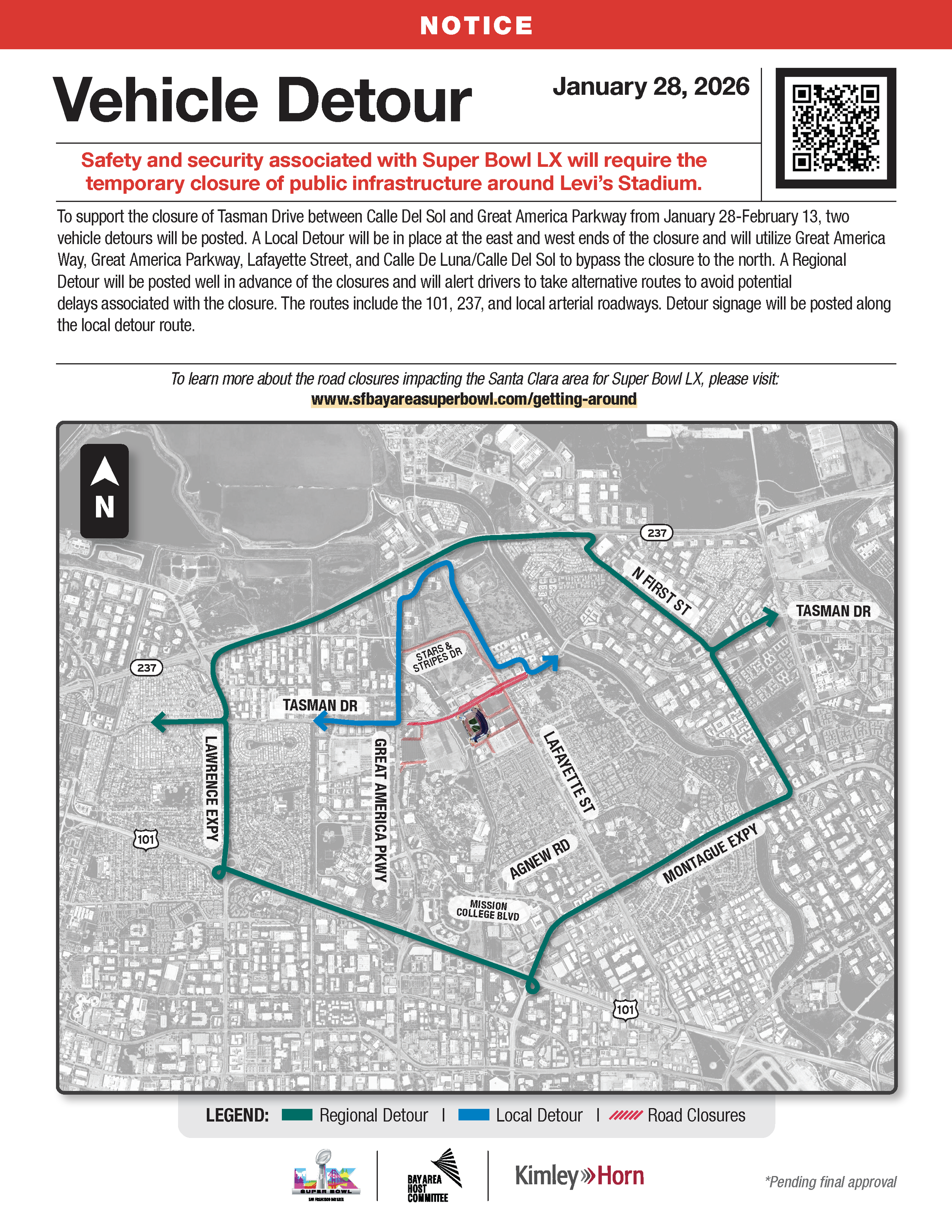
The Bay Area’s Super Bowl buildout is moving from planning to pavement. Santa Clara is beginning major road closures and security restrictions around Levi’s Stadium as the region prepares to host Super Bowl LX on February 8, 2026.
Officials are establishing a high-security zone in the stadium area, with closures starting well ahead of game day and continuing afterward. The intent is to create protected perimeters for credentialed access, security screening, broadcast operations and the large crowds expected for Super Bowl week events.
According to local reporting, some closures are already in place. Stars and Stripes Drive, which loops around the venue, has been shut since early January and is expected to remain closed into late February, affecting drivers, cyclists and pedestrians who normally use the corridor.
More restrictions are scheduled to begin in the final days of January. Tasman Drive is slated for a long closure window, and Great America Parkway will face significant limitations, particularly on game day, when traffic control measures typically tighten to manage buses, emergency access and pedestrian flow.
The disruption is not limited to vehicles. Some sidewalks and adjacent walkways are expected to be off-limits within the security perimeter, creating detours for foot traffic and placing additional pressure on transit stations serving the stadium.
Transportation agencies are urging people to avoid driving to the area during peak periods. Public transit is being positioned as the default option, with light-rail service and rail connections feeding into the stadium district to reduce gridlock and speed up security processing.
For residents and workers near the venue, the closures mean weeks of altered commutes, redirected deliveries and changing access rules. Organizers say signage, mapping and coordinated traffic engineering are intended to reduce confusion, but they acknowledge that congestion will be difficult to avoid.
The Super Bowl itself is still two weeks away, but the region’s operational timeline is already underway—an early reminder that hosting the NFL’s showcase game is as much a logistics and security project as it is a sporting event.