31,000 Kaiser Permanente health workers strike across California and Hawaii over staffing and pay
Tens of thousands of Kaiser Permanente nurses and other clinicians walked off the job in California and Hawaii, saying chronic understaffing and stalled bargaining have made patient care harder and pushed workers to demand better compensation and safer staffing levels.
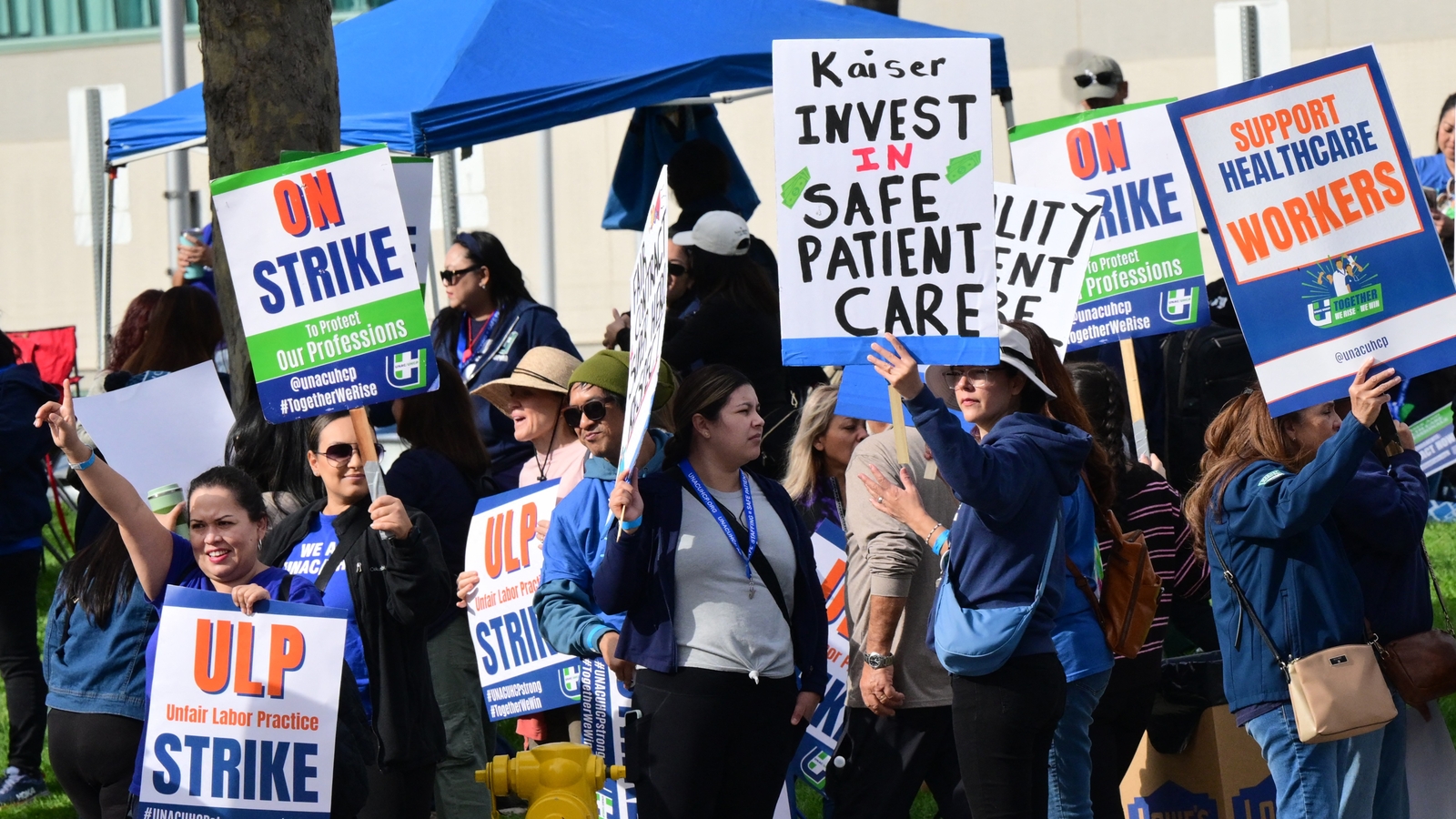
About 31,000 Kaiser Permanente health care workers in California and Hawaii went on strike Monday, escalating a long-running contract dispute over staffing levels, pay, and what unions describe as delays that are increasingly affecting patient care. The walkout includes nurses and other clinical professionals—such as pharmacists, physician assistants, and nurse practitioners—represented by the United Nurses Associations of California/Union of Health Care Professionals.
Picket lines formed outside Kaiser facilities across the region, including in Southern California, where workers said the core fight is not only about wages but also about whether staffing models keep up with patient needs. Union representatives argue that short staffing creates unsafe conditions for patients and contributes to burnout and retention problems among clinicians who say they are asked to do more with less.
The union has framed the strike as the culmination of a drawn-out bargaining process that has stretched for months without resolution. Workers say negotiations have repeatedly stalled, and that proposals have failed to address the day-to-day reality inside hospitals and clinics, where staffing gaps can mean longer waits, rushed care, and limited time for complex cases.
Kaiser Permanente, one of the largest nonprofit health systems in the U.S., faces a high-stakes test: the organization must maintain operations and continuity of care while responding to workforce demands that reflect broader pressures across American health care. Since the pandemic era, many systems have struggled with hiring pipelines, clinician fatigue, and intensified public attention on staffing ratios and patient safety.
The strike’s breadth highlights how labor actions are no longer confined to a single job class. By including multiple clinical roles, the walkout underscores the interdependence of modern care teams: when nurses, advanced-practice clinicians, and other specialists coordinate daily, disruptions can ripple quickly through scheduling, inpatient capacity, pharmacy services, and elective procedures.
Union leaders said the walkout will continue until a deal is reached, a posture designed to increase pressure on management to return to the table with stronger commitments. The demand package emphasizes safe staffing and fair compensation, with workers arguing that recruiting and retention cannot improve without both.
Patients are likely to feel the impact through rescheduled appointments or longer waits, though systems typically attempt to mitigate disruption using contingency staffing and triage. The dispute also lands at a moment when many Americans are sensitive to health care access issues, amplifying the political and reputational stakes for a major provider. Whether the strike ends quickly may depend on how far Kaiser is willing to move on staffing guarantees and how firmly workers hold the line on working conditions they say have become unsustainable.